Marae outreach raising awareness about ‘the longest goodbye’
24 February 2026
Hui brings together Centre for Brain Research with whānau carers, clinicians and healthcare workers.

They came to honour parents and grandparents, sharing stories of whānau determined to keep their loved ones affected by mate wareware (dementia) at home before they eventually passed.
Around 90 people gathered at Te Papaiouru (Ōhinemutu) marae in Rotorua on 20 February for a powerful hui with Waipapa Taumata Rau, University of Auckland’s Centre for Brain Research (CBR), alongside whānau carers, clinicians and healthcare workers.
The latest hui is part of CBR’s marae to marae outreach, which takes plain language brain health kōrero to communities across the motu, especially where specialist services can be hardest to reach.
Changing narrative, from stigma to strengths based, whānau led care
Associate Professor Dr Makarena Dudley (Te Rarawa, Ngāti Kahu), CBR Deputy Director (Māori), says she and outgoing Director Professor Sir Richard Faull have delivered presentations to more than 20 marae around the motu. The delegation to Te Papaiouru included new Director Professor Hanneke Hulst, kaumātua Sonny Niha, and doctoral student Meikyla Mason. Associate Professor Dudley thanked Te Papaiouru marae for a beautiful pōwhiri and all those who turned up on the day.
“The whole idea of the presentations is to raise awareness of mate wareware (dementia) so that people can become more familiar with the condition, what it entails, and how it impacts Māori.”
Mate wareware, “the illness of forgetting” or “the condition of memory loss” emerged through kōrero with kaumātua and iwi during nationwide research led a decade ago by Dr Dudley. It was found to be the most culturally appropriate and accepted term across marae and regions. Many whānau prefer mate wareware because it carries less stigma than the word “dementia” and aligns more naturally with Māori ways of understanding changes in memory, behaviour, wairua and ageing.
“We wanted to move away from the stigma, because that’s not necessarily our story. I’ve met many whānau who’ve cared for someone with mate wareware and told me what an incredible experience it has been, what different generations learned, how they drew closer.”
Dr Dudley says a young researcher is now writing a whānau based framework for managing mate wareware from that experience.
“We need to change the narrative to something positive and strengths based, not something to fear.”
I’ve met many whānau who’ve cared for someone with mate wareware and told me what an incredible experience it has been - what different generations learned, how they drew closer.
Calling rangatahi into the field
Dudley says it is crucial that young Māori enter the field of neuroscience, given equity gaps and the need for data driven advocacy.
“Sadly, Māori are more likely to get mate wareware than Pākehā, probably due to being over represented in risk factors.”
To understand how many Māori live with mate wareware, research is underway around the motu to gauge the numbers. Māori also develop mate wareware around eight years earlier than non-Māori, and are less likely to go into aged residential care.
“That’s a huge burden on whānau. We also need more of our young people in neuroscience to address diseases that impact the brain like mate wareware. Our whānau need you - your reo, tikanga, and wairua in the lab and clinic are part of the solution.”
Manaakitanga in action, the promise of science grounded in whānau stories
Sir Richard Faull (Te Ātiawa) shared how meeting whānau transformed his life’s work:
“As a young scientist I wanted to understand how things worked… then one day a whānau with Huntington’s disease came to see me. There wasn’t a test then. They asked me to examine their mother’s brain after she passed; we looked, and it was clear, she died of this terrible disease. They said: ‘You keep Mum’s brain and you find out why, so our kids don’t have to suffer the same fate.’ That moment changed everything.”
“Across more than 20 marae visits, we’ve heard heartbreaking stories from carers carrying an immense load, often with little support. Hui like today are manaakitanga in action - listening, informing, and connecting whānau to help. Science progresses when it’s guided by people’s lives.”
Sir Richard acknowledged the significance of newly arrived CBR Director and multiple sclerosis expert Professor Hanneke Hulst; this was her first-ever marae visit and pōwhiri experience at Te Papaiouru, demonstrating a commitment to brain health equity grounded in partnership.
Māori are disproportionately affected by mate wareware and are often diagnosed later, compounding carer burden, particularly in rural areas where support and specialist access are limited. The marae to marae approach meets whānau where they are, pairing clinical guidance with mātauranga Māori and whānau voice.
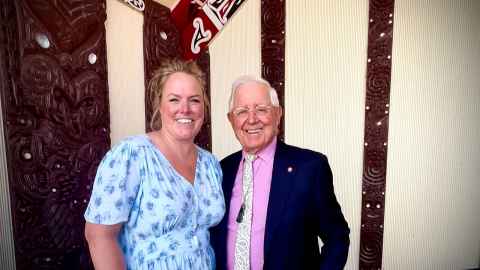
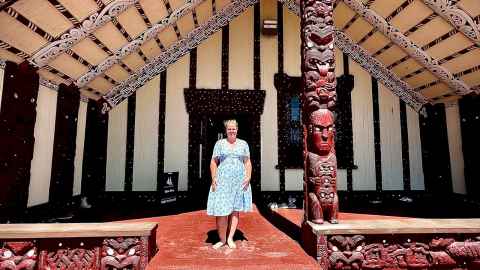
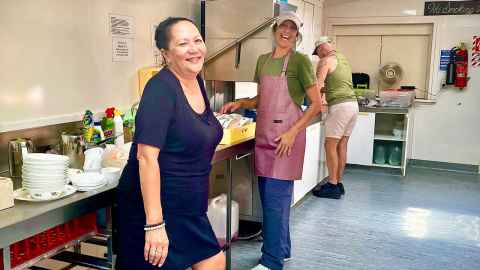

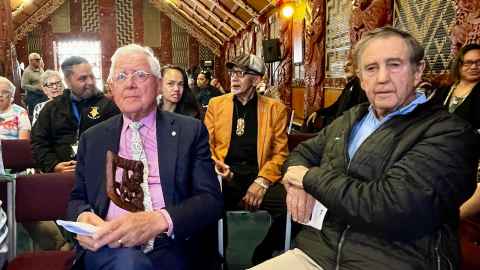
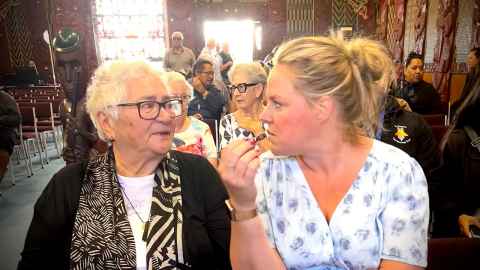


Alongside research information, the hui created space to honour those who have passed, to speak openly about the realities of caregiving at home, and to acknowledge frustration at systemic gaps.
Brenda Lee of Rotorua said her late husband developed mate wareware; she cared for him for a number of years before his passing. She wasn’t sure whether attending the hui would be triggering.
“I didn’t know if I was going to come, but I wanted to see if there was anything new.”
She had attended seminars and sought local services during her years of caregiving, trying to get answers and support.
“But there are no easy answers… from birth a child goes from one step to another, with dementia it’s the reverse of that.”
Seagina Te Ahuahu, Group Manager of Manaaki Ora Trust, hosted the event. Listening to the many stories shared by whānau carers, she acknowledged the aroha, grief and determination in the whare.
“To all the whānau who have a whānau member who is impacted, my aroha to you. Certainly it’s not an easy journey - it’s an emotional journey, the longest goodbye, watching a loved one disappear before your eyes even while they’re still with you.”
She said one of the real benefits of the hui was highlighting healthcare and support services that are accessible.
Understanding mate wareware and where to seek help
Common signs: memory loss disrupting daily life; confusion/disorientation; word finding difficulty; mood/behaviour changes; challenges with everyday tasks; and, for some, wairua related changes that still signal a need for support.
Where to seek help
Your GP/Māori health provider: assessment, memory clinic referral, medication review, carer support.
Centre for Brain Research: marae based education, resources, and links to services; kaupapa led by Māori researchers and clinicians.