My Space: Barkin Sertkaya
2 June 2026
The University's Esports Arena is a place for students to meet, socialise and blow off steam, as well as compete.

Throughout much of his childhood and teenage years, Barkin Sertkaya was a classical guitar student in the demanding conservatory system in his native Turkey.
It required long hours of music practice, but in the little free time he had, he’d turn to computer gaming, mainly playing first-person shooter games like Counter-Strike to connect with friends and blow off steam.
“We were digital natives, so I grew up with screen time. Gaming was a part of household life,” he says.
“As a somewhat reserved musician, it was a social thing for me.”
Barkin has since become a classical guitar teacher, and his gaming connections have endured and evolved too.
When he’s not teaching at the School of Music, where he completed his masters with first class honours in 2023 and is about to start a PhD, you’ll find him in the University’s Esports Arena.
As the University’s esports coordinator, he’s the kaitiaki of the arena, located on Level 1 of the Kate Edger building, and has worked in the space since its inception in 2022. It’s a busy role and, in contrast to the stereotype of gamers as loners, the arena hums with students.
“They come in, often in groups of three or four, when they’ve had a busy day or maybe an exam and they want to just blow off some steam, so they’ll hop into a game,” says Barkin. “Or perhaps they have friends in Portugal or Egypt or America, and this is a way to catch up with them and socialise.”

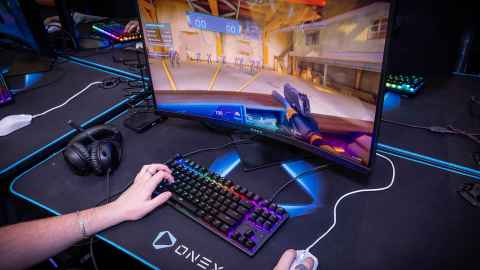





Almost all are playing social games, where groups of gamers band together on a mission, with the first-person shooter game Valorant currently the most popular.
Socialising and inclusivity are also the focus of weekly events held in the arena, often in conjunction with the University of Auckland Esports Club.
There’s also a competitive aspect to what happens in the arena, which hosts interfaculty and inter-residential esports championships as well as events with external organisations, such as the New Zealand Esports Federation and tech companies.
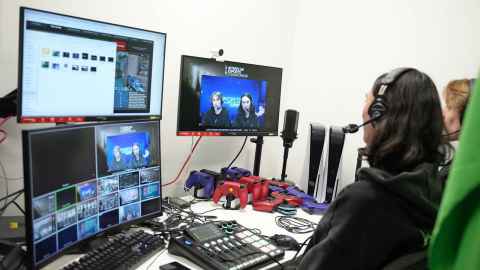
One of Barkin’s favourite spaces in the arena is its broadcast setup, from which competitions are streamed on Twitch – an interactive livestreaming service – with hundreds of fans tuning in at times to watch, and listen to expert commentary.
Gaming is a serious business. Globally, esports and interactive entertainment now generate more revenue than film and recording music combined, noted Dr Kenny Ching, a senior lecturer in management and international business at the University, in an opinion piece earlier this year.
Esports “provide a training ground for world-class teamwork and coordination and also digital skills, talent development, and economic growth”, he said, meaning they’re not only a way for students to relax and socialise but can also contribute to their future employability.
Barkin says he’s thrilled he’s been able to put his gaming background to use in his role at the arena, and he still unwinds at the end of the working day by jumping into a game at home.
“My son goes to sleep at seven, and from 7.30 I’ll spend a couple of hours most days playing Magic: The Gathering or a role-playing game. It’s still a part of my schedule.”
- Caitlin Sykes
This article first appeared in the June 2026 issue of UniNews.