My Space: step inside the Black Box
1 October 2026
As part of its regular My Space series, UniNews goes inside the University's Black Box screen production studio.

The name on the door says it all: the Black Box.
The University’s film production studio is literally a big black box, with black floor tiles, black curtained walls, and a black ceiling hung with lighting rigs.
Tim Signal, the technician responsible for managing the studio, says the all-encompassing colour scheme isn’t just for looks; it provides a neutral space in which film students can precisely control conditions and create the effects they want with lighting.
“If we’re using cameras in here, we don’t want competing colours on the walls,” he explains, “and when we’re doing lighting workshops, for example, we have full control because there’s no daylight.”
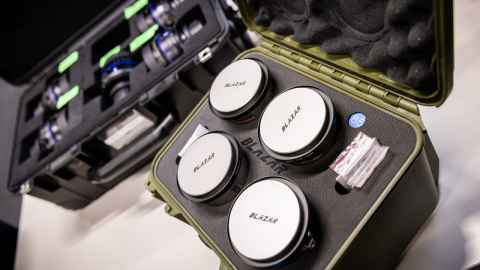
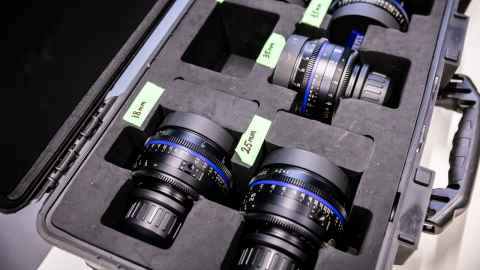
Film students in their final undergraduate and postgraduate years have a strong practical component in their coursework; they’re making films, and the studio is home to all kinds of cool kit they can use to bring their visions to life.
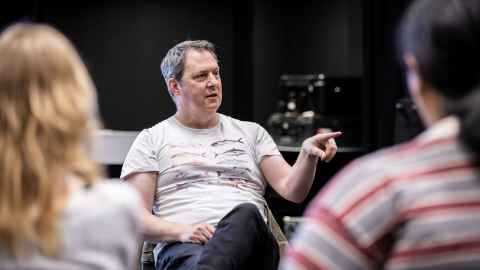
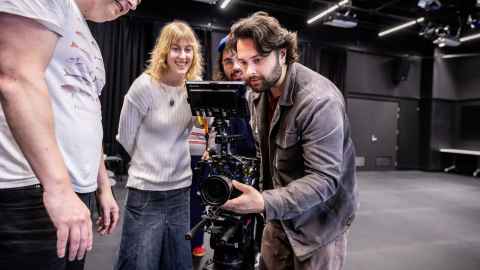
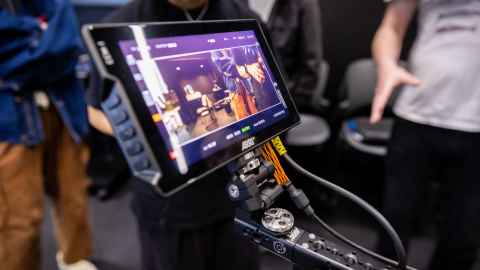
In a recent camera workshop, filmmaker and academic Peter Simpson taught screen production masters students how to use an ARRI Mini LF – a type of camera used on major film sets – which they use to make their final films. Students also have access to equipment like dollies – platforms on which cameras are mounted that run on tracks to create smooth-moving shots (think the famous shot of actor Roy Scheider’s face when his character realises a shark is attacking a swimmer in Jaws). The studio also has a cinema-quality setup for screenings.



As well as working as the studio’s technician, Tim balances teaching duties with his PhD, which is looking at the potential impact of replacement technologies on how humans express themselves through film. It’s a prescient and fast-moving topic, given AI is already being used to replace workers in many areas of the screen industry.
“With AI, we’re always talking about data, data, data,” he says. “But what we ask the students is, ‘What is this data?’ It’s all the creative human expression of screenwriters, directors, actors, set decorators, sound engineers, which has been taken and then used to make something that isn’t as good.”
Back in his studio job, Tim says he loves the variety of the work. While it’s mainly used by media and screen studies students, when possible the Black Box is also used by students studying subjects such as communications, dance and drama.
“You’d think that there wouldn’t be much you could do with a big, black empty space, but it’s actually central to delivering an industry-fit curriculum,” he says.
This article first appeared in the October 2026 issue of UniNews.